
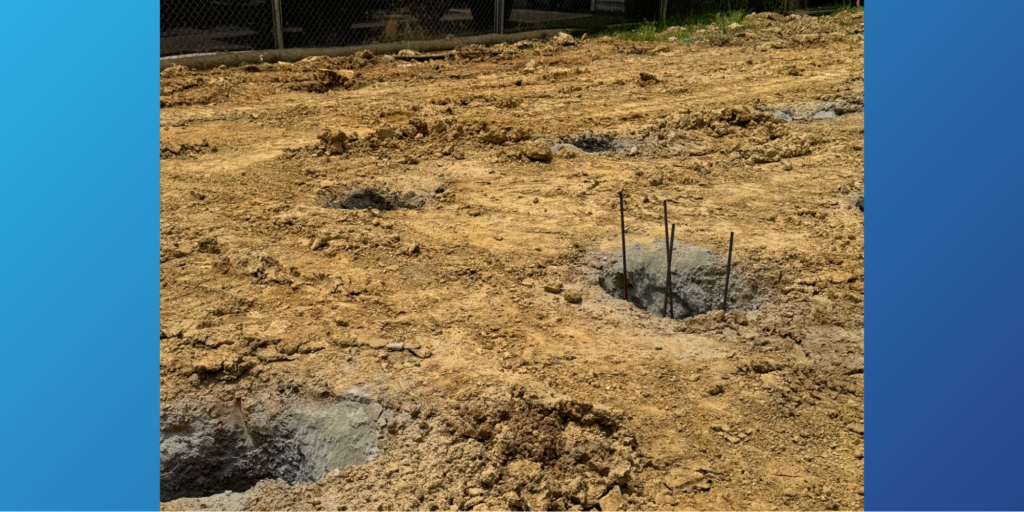
If you want to build an addition to your home, you may have some questions about the foundation building process (and your foundation in general).
In this post, we’ll answer them for you.
These answers are based on our experience serving the Birmingham, AL area.
Now, let’s get to it…
Does the quality of the foundation affect my addition long-term?
Yes.
If the foundation work is not done right, you can have shifting and major home repair needs within just a few months after construction (if not before).
If the foundation is not built correctly, you can have very expensive repairs down the road. As of this writing, you can expect to pay at least $10,000 to fix foundation problems.
The nice thing is, at least in the Birmingham area, it’s hard to find a new foundation that is built horribly.
That’s because our area has some strict rules when it comes to building foundations.
So, inspectors will need to do a thorough review before it can be up to code.
How do builders like you make sure the ground won’t shift or cause problems later?
To be clear, your ground is always going to shift.
Depending on the weather and the time of year, the soil is going to expand and shrink.
You can’t control that. What you can control is drainage.
Our partner company can take care of that, making sure water is diverted away from your foundation using good grading practices and a good gutter system.
And if our partner can’t divert the water away (because, for example, your house is at the bottom of a hill), they’ll provide a solution that keeps water from impacting your foundation.
What factors determine whether a slab, crawl space, or basement is the right choice for my addition?
Your foundation choice typically comes down to topography and cost.
Because of Birmingham’s hills, a lot of the houses here have basements (even though a basement foundation is always the most expensive option).
A less expensive option is to go with either a crawl space or a slab.
A crawl space foundation is always going to be cheaper than a basement foundation, but it may not necessarily be cheaper than having a slab.
If you have a flat property, using a slab foundation is by far the cheapest option.
But if your property is on a hill, having your house on a slab might be more expensive than having it on a crawl space, due to the excavation needed.
If all this sounds confusing, don’t worry. We can help you determine what you need.
What early signs of foundation issues should I keep an eye on after construction?
Here are some things to look out for when spotting foundation issues:
- Cracks above windows and door frames (specifically look for diagonal or stairstep cracks)
- Trim pulling away from your siding or brick
- Increasingly uneven floors
- Sagging floors
- Sloping walls
- Stuck doors or windows
Keep in mind that some foundation settling is normal. But normal settling shouldn’t cause major foundation problems.
Wrapping Up
We hope this post provided some useful foundation insights.
At Little Cahaba Remodeling, we don’t cut corners, and our team will make sure your addition’s foundation is built correctly.
If you’d like to learn more about our services give us a call at (205) 946-0391.